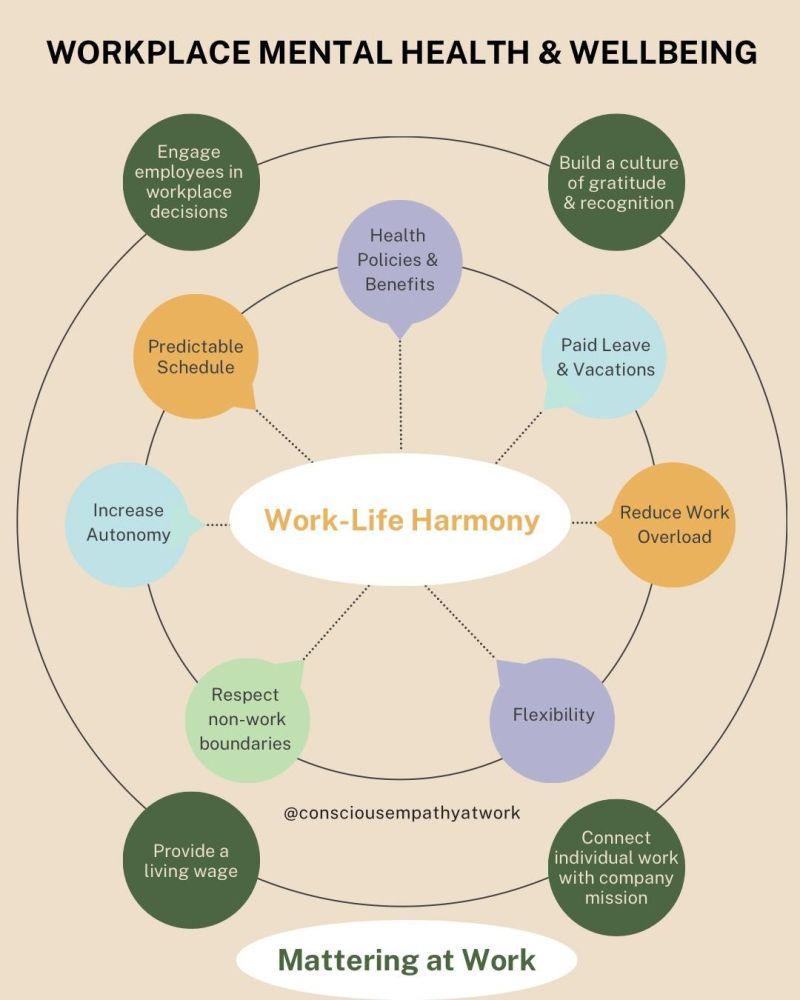
Employee well-being refers to the physical, mental, emotional, social and financial health of employees. It has become a major concern for organizations because employees cannot perform consistently when they are exhausted, stressed or emotionally disconnected from their workplace. A healthy workplace recognizes that employees are individuals with personal responsibilities, emotional needs and aspirations—not merely resources used to achieve organizational goals.
Organizations that invest in employee well-being are more likely to experience higher productivity, stronger employee engagement, lower absenteeism and better retention. Well-being should therefore be viewed as a long-term organizational strategy rather than a temporary benefit or occasional wellness activity.
Supporting Mental Health
Workplace stress may arise from heavy workloads, unclear responsibilities, job insecurity, difficult relationships or a lack of managerial support. When stress continues for a long period, it can result in burnout, anxiety, reduced confidence and declining performance.
Organizations can support mental health by providing confidential counselling, employee-assistance programmes, stress-management workshops and access to trained professionals. Managers should also be trained to recognize early signs of distress and respond sensitively.
Creating a culture in which employees can discuss mental health without fear of embarrassment or discrimination is equally important. A counselling programme will have limited value if employees believe that using it could negatively affect their careers.
Encouraging Work-Life Balance
Work-life balance allows employees to meet their professional responsibilities without continuously sacrificing their family life, health or personal interests. Long working hours and constant digital communication may create the feeling that employees must always remain available.
Organizations can improve work-life balance by establishing reasonable workloads, encouraging employees to take leave and respecting boundaries after working hours. Managers should lead by example and avoid glorifying overwork. Productivity should be measured through the quality and effectiveness of work rather than the number of hours an employee remains online or in the office.
When employees receive sufficient time to rest, they are more likely to return to work with greater energy, concentration and creativity.
Building a Supportive Organizational Culture
Employee well-being is strongly influenced by leadership and workplace relationships. Respectful communication, fair treatment, manageable workloads and appreciation can significantly improve an employee’s daily experience.
Managers should regularly communicate with employees, invite suggestions and respond to concerns. Recognition can be provided through appreciation messages, awards, growth opportunities or public acknowledgement of good work. Even simple expressions of gratitude can strengthen an employee’s sense of belonging.
Organizations should also promote inclusion and ensure that employees are protected from bullying, harassment and discrimination. A workplace cannot claim to support well-being if employees do not feel psychologically safe.
Connecting Well-Being with Productivity
Healthy employees generally demonstrate better concentration, creativity and problem-solving ability. They are also more likely to cooperate with colleagues and provide better service to customers. In contrast, employees experiencing burnout may remain physically present but become mentally disengaged.
Organizations should regularly measure well-being through confidential surveys, absenteeism levels, turnover data and employee feedback. The purpose of measurement should be to improve working conditions—not to judge employees for experiencing stress.
Employee well-being and organizational productivity are not competing priorities. They reinforce each other. When organizations genuinely care for employees, they create a more committed, resilient and sustainable workforce. A productive workplace is ultimately one in which people have the support, energy and motivation to perform well over the long term.
–Dr. Ashish Chutke
(I/c Principal, SICS)
